What Is the Best Nail-Free Glue for Global Buyers?

Time:2026-10-10 Author:Amelia
0%

Choosing the best Nail-Free Glue is not a simple matter of picking the strongest tube. Global buyers must compare surface compatibility, curing time, temperature resistance, packaging quality, and documented safety performance. A product that grips painted drywall may behave differently on ceramic tile, glass, metal, or sealed wood. The details matter.

Industry data shows why this category deserves careful evaluation. Grand View Research reported that the global adhesives and sealants market reached approximately USD 78.6 billion in 2023, with continued growth expected through 2030. MarketsandMarkets also projected steady expansion in construction adhesives, driven by renovation, modular interiors, and lighter installation methods. These figures suggest strong demand, but they do not prove that every Nail-Free Glue performs equally.

Real purchasing decisions require evidence. Look for technical data sheets, recommended load limits, open time, full-cure time, and storage conditions. A carton stored in a hot warehouse may not perform like a fresh sample tested in a laboratory. Small print counts. So does batch consistency.

Professional buyers should request adhesion testing on their actual materials. They should also review VOC information, labeling, and applicable regional requirements before import or resale. ISO and ASTM test methods can improve comparison, although test results may not perfectly match field conditions. That gap is easy to underestimate.

There is no universal best choice. The right adhesive depends on the job, substrate, climate, and user expectations. This guide examines those variables with practical caution, because “nail-free” does not mean risk-free.
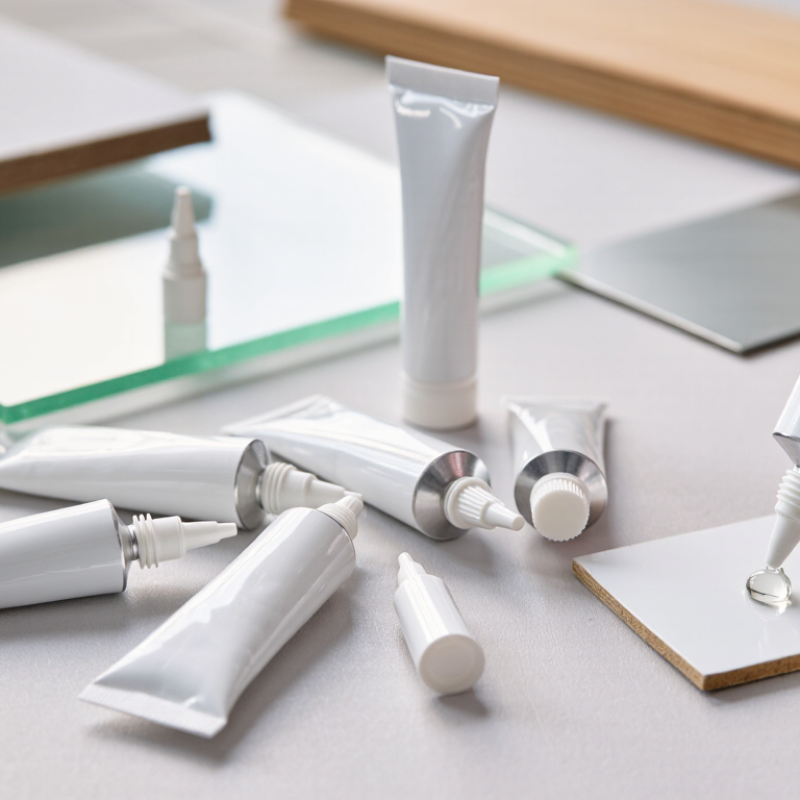
What Is the Best Nail-Free Glue for Global Buyers?

Nail-Free Glue Basics: MS Polymer, PU, and Acrylic Adhesive Technologies

What Is the Best Nail-Free Glue for Global Buyers?

Nail-Free Glue Basics: MS Polymer, PU, and Acrylic Adhesive Technologies

The best nail-free glue depends on the surface, load, humidity, and expected service life. Technology matters more than attractive packaging.

MS polymer adhesive cures with moisture and usually offers low odor, flexibility, and strong adhesion. It suits wood, metal, panels, and many porous surfaces. It also handles small movements caused by temperature changes. However, curing can slow in dry rooms. It needs air.

PU adhesive often delivers strong bonding on construction materials and uneven surfaces. Moisture helps it cure, but excess moisture may cause foaming or expansion. This can create a messy bond line. Careful application is essential. Acrylic adhesive provides quick grab and reliable performance on selected smooth surfaces. Some formulas resist weathering well, while others need clean, dry substrates and controlled conditions.

In practical sourcing, I check technical data before comparing price. Open time, final strength, curing speed, temperature range, and paint compatibility all matter. A simple test uses the actual substrate, a measured bead, and a fixed weight. Record failure after 24 and 72 hours. Results can differ between climates. That trade-off matters.

Global buyers should request safety data, technical specifications, batch traceability, and storage guidance. Local chemical and labeling requirements also need verification. A strong adhesive can still fail when the surface is dusty or oily. I have seen neat laboratory results disappoint on real walls. Test before scaling.

Bond Strength Testing: Compare Products Under ISO 4587 Lap-Shear Methods

What Is the Best Nail-Free Glue for Global Buyers?

Global buyers often ask which nail-free glue has the highest bond strength. ISO 4587 provides a disciplined way to compare products. It measures tensile lap-shear strength between rigid substrates under controlled conditions. The result is useful, but it is not a universal ranking.

A reliable test begins with consistent panels, overlap area, surface cleaning, adhesive thickness, and curing time. Technicians should record temperature and humidity during preparation. Each specimen needs careful alignment before loading. A testing machine then applies force at the specified rate until the joint fails. The measured strength should be reported with individual results, averages, and variation.

Failure details matter. Cohesive failure leaves adhesive on both surfaces, while adhesive failure separates the bond cleanly. Mixed failure can reveal uneven preparation or insufficient curing. These observations often explain unexpected numbers. A strong average may hide weak samples. That is a problem.

ISO 4587 lap-shear testing is valuable for screening nail-free adhesives for metal, painted panels, or other rigid materials. However, wall mounting may also involve peel, vibration, moisture, temperature changes, and long-term creep. Buyers should request the substrate type, overlap dimensions, curing schedule, and conditioning history. Testing only one material combination can create false confidence. I would treat published strength as evidence, not a promise. Real installation trials remain necessary, especially when surfaces differ across markets.

Cure Performance: Evaluate Skin Time, Full Cure, and 24-Hour Strength

Global buyers should judge nail-free glue by cure evidence, not attractive claims. Skin time shows when the surface stops feeling wet. It does not prove safe handling or strong bonding. In a warm, humid warehouse, a five-minute skin time may change dramatically. ASTM D1002 and ISO 4587 provide recognized methods for comparing adhesive shear strength. Ask suppliers for test conditions, substrate type, temperature, and loading speed.

Full cure is more important than quick grab. Many construction adhesives gain strength gradually, often requiring 24 hours before serious loading. A useful technical sheet should report initial set, full cure, and 24-hour strength separately. Grand View Research valued the global adhesives and sealants market at about USD 80 billion in 2024, with continued growth expected through 2030. Mordor Intelligence also forecasts strong expansion, but its market estimates differ. That gap matters. Buyers should not treat market forecasts as product proof.

In supplier trials, test identical panels at 23°C and 50% relative humidity, then repeat under colder conditions. Record squeeze-out, surface skin, movement, and bond failure. The 24-hour result should include a measurable strength value, preferably in MPa or N/mm². A fast skin can hide slow internal curing. I would also question any data showing only perfect laboratory results. Real surfaces contain dust, uneven pressure, and small gaps. Those details are inconvenient, yet they often decide whether a global shipment performs reliably.

Safety Screening: Check VOC Emissions, SDS Compliance, and REACH Rules

What Is the Best Nail-Free Glue for Global Buyers?

Safety screening should begin with VOC emissions, not advertising claims. The US EPA reports that indoor VOC levels can average two to five times higher than outdoors. During certain activities, levels may exceed outdoor concentrations by more than 100 times. A strong smell is a warning sign, but low odor does not prove low emissions. Ask suppliers for test conditions, emission results, and curing time. Results without units or laboratory details deserve caution.

An SDS must follow the destination market’s format and language requirements. Check Section 3 for ingredients, Section 8 for exposure controls, and Section 10 for reactivity. For European sales, confirm REACH obligations and the latest SDS requirements under Regulation (EU) 2020/878. ECHA enforcement reports repeatedly show that chemical information errors remain common across supply chains. That makes document review essential. My screening checklist is not perfect, especially when formulas change between batches.

Tips: Request a recent SDS, technical data sheet, and VOC test report. Compare the product name, manufacturer, batch information, and revision date. Keep a small sample in a ventilated room. Record odor, curing time, and surface performance. Never rely on a “non-toxic” phrase alone. The WHO Guidelines for Indoor Air Quality also support reducing avoidable indoor chemical emissions, even when no single product limit applies.

What Is the Best Nail-Free Glue for Global Buyers? - Safety Screening: Check VOC Emissions, SDS Compliance, and REACH Rules
Safety Dimension What to Check Reliable Evidence or Data Buyer Screening Guidance Status
VOC emissions Identify volatile organic compounds released during application, curing, and normal indoor use. Do not rely only on the phrase “low VOC.” Independent chamber or emission-test report; test method, sampling time, temperature, humidity, application rate, and detected compounds should be stated. ISO 16000-series methods are commonly used for indoor-air emission testing. There is no single worldwide VOC pass limit for every adhesive. Compare results with the destination market, intended indoor use, and any applicable building-material or indoor-air scheme. Evidence required
VOC content versus VOC emissions Separate the amount of volatile material in the wet product from the amount actually emitted into indoor air after installation. Technical data sheet showing solids or water content, plus a separate emissions report. A low-solvent formulation does not automatically prove low indoor-air emissions. Treat “water-based,” “solvent-free,” and “odorless” as product claims that still require supporting test data. Verify separately
SDS availability Obtain a current Safety Data Sheet in the required language for each destination market. SDS with the internationally recognized 16-section structure, product identifier, supplier details, hazard classification, composition, first aid, firefighting, accidental-release, handling, exposure controls, stability, toxicology, disposal, transport, regulatory, and revision information. Check the issue or revision date, product code, concentration ranges, emergency contact, and consistency with the label and technical data sheet. Essential
SDS legal trigger Confirm whether the adhesive is classified as hazardous under the destination jurisdiction’s chemical rules. For the European Economic Area, REACH Article 31 sets SDS requirements for hazardous substances and mixtures and for certain mixtures supplied on request when specified hazardous ingredients are present. A supplier should not refuse reasonable safety documentation merely because the product is marketed as “non-toxic” or “non-hazardous.” Local rules may differ outside Europe. Jurisdiction-dependent
REACH substance status Screen ingredients and impurities against REACH restrictions, authorization requirements, and the Candidate List of substances of very high concern. Written REACH declaration, composition review, and current Candidate List check. The Candidate List changes over time, so the review date should be recorded. Do not accept a generic “REACH compliant” statement without product identification, review date, and coverage of substances in the supplied mixture or article. Essential for EEA trade
SVHC communication Determine whether any Candidate List substance is present above the applicable article communication threshold. Under REACH Article 33, information must generally be provided for an article containing a Candidate List substance above 0.1% weight by weight, subject to the applicable legal context. Request a substance-level declaration for the cured adhesive and packaging or mounting component where relevant. The 0.1% threshold is not a universal “safe” limit for all chemical obligations. Conditional
REACH restrictions and authorization Check whether any ingredient or use is limited or requires authorization under REACH Annex XVII or Annex XIV. Supplier declaration linked to the exact formulation and intended use, supported by the applicable ECHA regulatory entries. A formulation may be legal for one use or concentration but restricted for another. Confirm the intended use rather than screening only the product name. Essential for EEA trade
Hazard classification and labeling Compare the label with the SDS classification for skin irritation, eye damage, sensitization, flammability, and environmental hazards. Applicable hazard pictograms, signal word, hazard statements, precautionary statements, and product identifier. In the EEA, classification and labeling generally follow the CLP Regulation. Reject mismatches between label and SDS. “Nail-free” describes the installation method, not the chemical hazard level. Essential
Formulation transparency Review relevant solvent, preservative, reactive, sensitizing, and residual monomer information at the level required by law. SDS Section 3, supplier composition statement, allergen or sensitizer declaration where applicable, and an independent restricted-substance test when risk justifies it. A confidential formulation may be acceptable, but the supplier must still disclose legally required hazard information and concentration ranges. Risk-based
Indoor-use suitability Assess ventilation, curing time, surface temperature, humidity, and whether occupants may be exposed during installation. Installation instructions, curing data, ventilation guidance, residual-odor information, and emissions results under representative conditions. Prefer products with clear ventilation and curing instructions. Do not occupy a poorly ventilated area sooner than the stated safe-use guidance. Essential for indoor use
Application and personal protection Check skin and eye contact controls, glove material, eye protection, spill response, and hand-cleaning instructions. SDS Sections 4, 7, and 8, including exposure controls and recommended personal protective equipment based on the formulation. Use the SDS controls even when the adhesive is sold for household or DIY applications. Avoid cleaning uncured adhesive with unsuitable solvents. Essential
Batch traceability Ensure every shipment can be linked to a production batch, expiry date, formulation version, and supporting test documents. Batch or lot number, manufacturing date, shelf life, storage conditions, certificate of analysis where applicable, and retained samples. Do not approve a safety file that cannot be connected to the actual shipped product. Essential for import control
Global documentation fit Confirm that SDS, labels, chemical inventory status, and restricted-substance declarations match each target country. Country-specific SDS and label versions, transport classification, importer information, and documented regulatory review. REACH compliance alone does not prove compliance in every global market. Build a destination-by-destination approval file. Essential for global buyers
Screening principle: the strongest nail-free adhesive candidate is the one with verifiable emissions data, a current jurisdiction-specific SDS, accurate hazard labeling, and documented REACH review for the intended use and destination market.

Global Buyer Checklist: Match Substrates, Climate, Packaging, and Shelf Life

What Is the Best Nail-Free Glue for Global Buyers?

Global buyers should begin with the substrate, not the advertised strength. A 2024 Grand View Research estimate values the global construction adhesives market at about US$11 billion. That growth increases product choice, but it also increases testing risk. Test painted drywall, ceramic, glass, aluminum, and ABS separately. Their surface energy, porosity, and coatings differ. ASTM D1002 lap-shear testing helps compare bonding strength, while peel testing exposes weak edges. A clean surface matters. Dust wins surprisingly often.

Climate changes the buying decision. In tropical shipping, 40°C storage and 75% relative humidity can accelerate curing, package swelling, and nozzle blockage. Cold regions need freeze-thaw checks before approval. ASTM D4332 can support conditioning studies for transport packaging. Packaging should include a moisture barrier, secure cap, batch code, production date, and clear application limits. Do not trust a strong carton alone.

Shelf life needs evidence. Ask for stability data from real-time and accelerated testing, not only a printed “24 months.” A 2023 Smithers packaging report highlighted continued pressure for durable, efficient packaging across global supply chains. That pressure can reduce material use, but thinner packaging may protect adhesive poorly. Small issue. Buyers should compare unopened and opened-package performance. I would also repeat field trials after transport; laboratory results sometimes look better than reality.

What Is the Best Nail-Free Glue for Global Buyers?

Global Buyer Checklist: Match Substrates, Climate, Packaging, and Shelf Life

The chart presents a practical 100-point screening model for nail-free glue procurement. Substrate compatibility receives the highest weighting because plastics, metals, glass, wood, and painted surfaces can require different adhesion approaches. Climate resistance, packaging protection, and shelf-life verification should also be confirmed before approving an adhesive for international distribution.

FAQS

What type of nail-free glue suits flexible surfaces?

MS polymer adhesive cures with moisture and usually remains flexible. It suits wood, metal, panels, and many porous surfaces. It can handle small temperature movements. Dry rooms may slow curing.

When is PU adhesive a practical choice?

PU adhesive bonds construction materials and uneven surfaces strongly. Moisture supports curing, but excess moisture can cause foaming. Apply a controlled bead. A messy bond line can result.

When does acrylic adhesive work best?

Acrylic adhesive offers quick grab on selected smooth surfaces. Clean, dry substrates improve reliability. Some formulas resist weathering well. Others perform poorly outside controlled conditions.

How should buyers compare curing performance?

Check skin time, initial set, full cure, and 24-hour strength separately. Quick skin formation does not prove a strong bond. Test identical panels at 23°C and 50% humidity. Repeat the trial in colder conditions.

Which surfaces should buyers test before ordering?

Test painted drywall, ceramic, glass, aluminum, and ABS separately. Their coatings, porosity, and surface energy differ. Dust can defeat strong adhesive. Test twice.

How much adhesive should a basic bond test use?

Use the actual substrate, a measured bead, and a fixed weight. Record squeeze-out, movement, and failure after 24 and 72 hours. Measure strength in MPa or N/mm² when possible. Real walls may behave differently.

What climate conditions can affect global shipments?

Tropical storage near 40°C and 75% humidity can accelerate curing. It may also cause package swelling or nozzle blockage. Cold regions require freeze-thaw checks. Transport changes matter.

What packaging and shelf-life details should buyers request?

Request a moisture barrier, secure cap, batch code, production date, and application limits. Ask for real-time and accelerated stability data. Compare unopened and opened packages. Printed shelf life alone is weak evidence.

Which technical documents should suppliers provide?

Request safety data, technical specifications, storage guidance, and batch traceability. Ask for test temperature, substrate type, and loading speed. Perfect laboratory data makes me cautious. Field conditions are messier.

Conclusion

Choosing the best Nail-Free Glue for global buyers requires more than comparing advertised holding power. The main technologies—MS polymer, polyurethane (PU), and acrylic adhesives—offer different balances of flexibility, moisture resistance, curing speed, and substrate compatibility. Buyers should request objective bond-strength data, ideally based on ISO 4587 lap-shear testing, and compare performance across common materials such as wood, metal, glass, ceramics, and selected plastics.

Cure performance is equally important: evaluate skin time, full-cure duration, and strength after 24 hours under realistic temperature and humidity conditions. Safety screening should include VOC emissions, a complete and consistent SDS, and compliance with applicable REACH requirements. A practical global purchasing checklist should also consider the intended climate, surface preparation, package design, dispensing method, storage conditions, and shelf life. By matching adhesive chemistry and packaging to the application and supply-chain environment, buyers can reduce failures, improve user safety, and achieve more predictable installation results.

Amelia

Amelia

Amelia is a seasoned marketing professional with a wealth of expertise in our company’s core offerings. With an unwavering passion for driving growth and innovation, she plays a pivotal role in shaping our marketing strategies and enhancing brand visibility. A key aspect of her responsibilities......