Choosing China’s best Waterproof Silicone sealant suppliers requires more than comparing prices or browsing polished factory websites. A dependable supplier should prove performance with technical data, batch records, and application testing. Look for neutral-cure or acetoxy formulas matched to glass, aluminum, concrete, sanitary areas, or exterior façades. The wrong chemistry may cause staining, weak adhesion, or early cracking.
Silicone chemist Michael J. Owen offers a useful principle: “A seal is only as reliable as the surface beneath it.” That observation remains practical on a busy construction site. Dust, moisture, oil, and uneven joints can defeat an excellent sealant. Experienced suppliers should explain surface preparation, primer use, curing time, movement capability, and storage conditions. Ask for test reports covering tensile strength, elongation, adhesion, weather resistance, and water exposure. Independent laboratory verification adds credibility.
Factory experience matters. So do formulation control, packaging accuracy, and responsive technical support. A supplier may offer attractive samples but inconsistent production batches. That weakness is easy to miss. Request recent samples from regular production, not only demonstration tubes. Check whether the manufacturer supports private labeling, export documentation, color matching, and stable lead times.
No supplier is perfect. This guide should not replace project-specific testing. Still, careful comparison can reduce costly failures. The strongest China-based Waterproof Silicone suppliers combine verified materials, transparent communication, and repeatable manufacturing. They do not promise impossible results. They explain limitations clearly. That is often the most reliable sign of professional expertise.
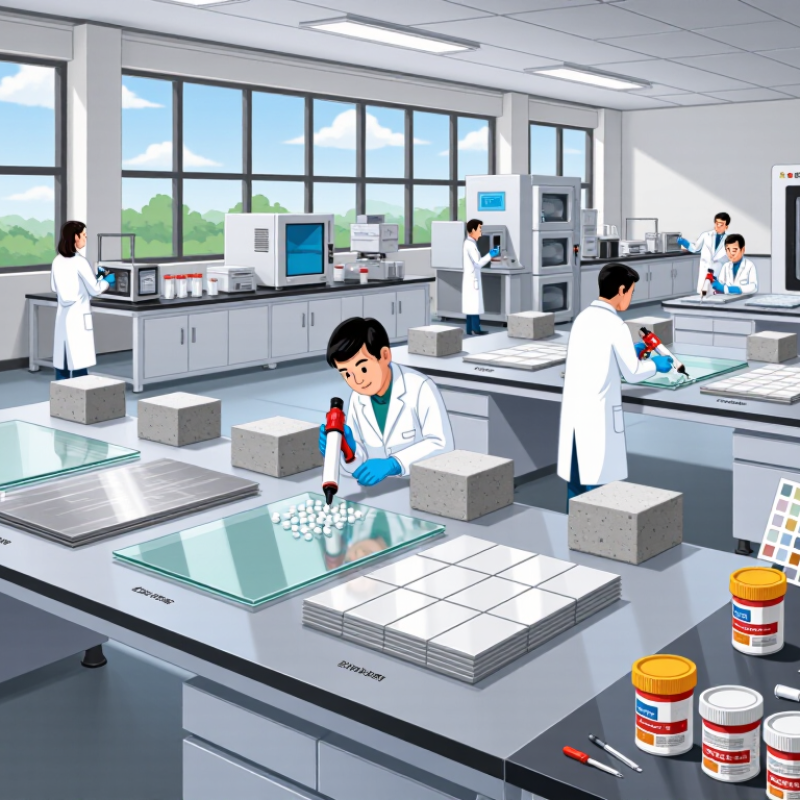
Waterproof silicone sealant is a flexible compound that blocks water, air, and moisture. It cures after reacting with humidity in the air. Unlike rigid cement, cured silicone can expand and contract with building materials. This flexibility helps protect joints from cracking. It is commonly used around bathroom sinks, showers, windows, doors, roofs, glass panels, and exterior wall gaps. Some specialized grades are also suitable for aquariums or areas with continuous water exposure. Always check the product’s technical data before choosing it.
When comparing waterproof silicone sealant suppliers in China, review curing time, temperature resistance, adhesion, shelf life, and test reports. A reliable supplier should explain surface preparation and provide consistent batch information. The sealant may fail if dust, oil, or standing water remains on the joint. The weak point is often preparation, not the material. A clean, dry joint usually gives better results than a thicker bead. Still, application conditions can vary, so small site tests are sensible.
Tips: Clean the surface carefully. Use masking tape for sharper edges. Do not disturb the bead during curing. Check whether the sealant is compatible with metal, stone, glass, or painted surfaces. A strong smell may indicate poor ventilation, although smell alone does not prove quality. Review failures honestly, because one successful repair cannot confirm long-term waterproof performance.
| Data Dimension | Sealant Type or Specification | Key Characteristics | Typical Waterproofing Applications | Important Selection Considerations |
|---|---|---|---|---|
| Definition | Waterproof silicone sealant | A flexible, rubber-like sealant based on silicone polymers that cures into a water-resistant and weather-resistant elastomer. | Sealing joints, gaps, penetrations, glazing interfaces, and connections exposed to rain or humidity. | Confirm that the product is intended for continuous moisture exposure and the specific substrate involved. |
| Curing system | Acetoxy cure | Usually releases acetic acid during curing and commonly has a vinegar-like odor. | Glass, glazed ceramics, and some non-porous household surfaces. | Not generally preferred for sensitive metals, alkaline substrates, concrete, or surfaces that may corrode or stain. |
| Curing system | Neutral cure | Releases neutral or low-corrosivity by-products during curing and is generally more substrate-compatible than acetoxy silicone. | Metal joints, concrete interfaces, curtain-wall glazing, windows, doors, and exterior construction joints. | Check compatibility with coatings, plastics, stone, and other porous materials before large-scale application. |
| Formulation | 100% silicone | Provides strong resistance to ultraviolet radiation, weathering, moisture, and temperature changes when properly formulated and cured. | Exterior building joints, bathrooms, kitchens, glazing, and long-term weather-exposed seals. | Pure silicone is generally more durable outdoors than many water-based acrylic alternatives, but it is usually not paintable. |
| Formulation | Silicone-modified or hybrid sealant | Combines silicone-related flexibility or weather resistance with properties from other polymer systems. | General construction joints, renovation work, and applications requiring a balance of adhesion and finishing characteristics. | Review the technical data sheet because performance, paintability, movement capability, and chemical resistance vary by formulation. |
| Movement capability | General-purpose flexible grade | Designed to accommodate limited expansion, contraction, and joint movement after curing. | Perimeter seals around sanitary fixtures, window frames, doors, and interior construction joints. | Joint width, depth, backing material, and movement rating must be matched to the actual joint design. |
| Movement capability | High-movement construction grade | Designed for larger cyclic movement caused by thermal expansion, building movement, or material differences. | Exterior façade joints, curtain-wall interfaces, precast concrete joints, and expansion joints. | Look for independently tested movement capability and relevant project specifications rather than relying only on the word “waterproof.” |
| Surface compatibility | Non-porous surfaces | Typically includes glass, glazed tile, anodized aluminum, and some coated metals. | Glass-to-frame joints, tile edges, shower enclosures, and metal panel connections. | Remove dust, oil, release agents, and loose material; adhesion testing may still be required. |
| Surface compatibility | Porous surfaces | Typically includes concrete, masonry, natural stone, and unsealed wood. | Concrete façade joints, masonry penetrations, stone interfaces, and building-envelope details. | Use a compatible grade and primer where required; some formulations can stain porous stone or show reduced adhesion. |
| Interior use | Bathrooms and kitchens | Requires resistance to repeated moisture exposure and good adhesion to common sanitary surfaces. | Bathtubs, sinks, shower screens, backsplashes, countertops, and plumbing penetrations. | Use a sanitary formulation where appropriate and allow full curing before exposing the joint to water. |
| Exterior use | Building envelope | Requires resistance to rain, ultraviolet radiation, temperature cycling, and weathering. | Window perimeters, façade joints, roof penetrations, cladding interfaces, and exterior door frames. | Verify compatibility with façade materials, joint movement, expected temperature range, and local construction requirements. |
| Industrial use | Electrical and equipment sealing | Can provide moisture protection and flexible sealing around selected housings, enclosures, and components. | Electrical enclosures, cable penetrations, appliance assemblies, and equipment joints. | Check electrical properties, flame rating, chemical resistance, operating temperature, and approval requirements. |
| Typical curing behavior | Moisture-cured silicone | Surface skin forms first, while deeper material continues curing as atmospheric moisture reaches the sealant. | Most standard one-component silicone sealing work. | Low humidity, excessive joint depth, cold conditions, or restricted ventilation can slow curing. |
| Application condition | Clean and dry substrate | Adhesion is improved when surfaces are free from water, dust, oil, grease, and weak surface material. | All waterproofing and joint-sealing applications. | Do not apply over standing water unless the product documentation specifically permits it. |
| Joint design | Backer rod and bond-breaker configuration | Controls sealant depth and helps create a two-sided bond instead of unwanted three-sided adhesion. | Movement joints in concrete, masonry, façade systems, and window installations. | Use a compatible backing material and follow the specified width-to-depth ratio for the selected product. |
| Performance property | Ultraviolet and weather resistance | Silicone generally maintains flexibility and color stability better than many organic sealants under outdoor exposure. | Roofing details, façades, glazing, external cladding, and exposed architectural joints. | Confirm the tested service life and color stability for the intended climate and exposure level. |
| Performance property | Temperature resistance | Many general-purpose silicone products tolerate substantial temperature variation after full cure; exact limits differ by formulation. | Exterior joints, glazing, appliances, and equipment exposed to temperature changes. | Use the manufacturer’s stated continuous and intermittent temperature limits instead of assuming all silicone grades are equivalent. |
| Supplier evaluation | Technical documentation | A reliable supplier should provide a current technical data sheet, safety data sheet, application instructions, and batch information. | Commercial, industrial, and construction procurement. | Compare test methods, stated standards, curing time, adhesion data, movement capability, and shelf life. |
| Supplier evaluation | Quality-control evidence | Useful evidence includes batch traceability, documented quality procedures, consistent packaging information, and test reports. | Projects where waterproofing performance and repeatability are critical. | Request samples and conduct substrate-specific adhesion and compatibility testing before approval. |
| Packaging | Cartridge, sausage pack, or pail | Packaging options are selected according to application tools, project volume, and dispensing equipment. | Cartridges for maintenance and small jobs; sausage packs or pails for higher-volume professional work. | Check nozzle compatibility, storage conditions, packaging integrity, shelf life, and minimum order requirements. |
Request batch-specific certificates, production dates, shelf-life records, and full safety data sheets. Ask for recent technical data sheets. The carton should match the batch number and laboratory report.
Request samples from at least three production batches. Apply them to glass, aluminum, and concrete panels under identical conditions. This reveals whether quality remains stable over time.
Measure skin formation, curing depth, adhesion, elasticity, and water resistance. Use identical panel sizes and curing times. Check performance after immersion.
Sealant may adhere well to glass but perform poorly on concrete or aluminum. Test the actual surfaces used in your project. Surface preparation changes results.
Check mixing equipment, cartridge filling, storage temperature, and rejected-material controls. Review internal test records, not only promotional documents. Look closely at filling accuracy.
Compare color, cartridge weight, curing behavior, and adhesion across different batches. Connect every carton to its production record. Small differences matter.
Yes, complete a small field trial before placing a large order. Test the sealant under dust, rain, ultraviolet exposure, and rushed installation conditions. Laboratory results can mislead.
Vague test evidence, unclear raw-material sources, and missing traceability deserve attention. Uneven color or incorrect labeling also signals weak control. Communication alone is not proof.
No. Regional manufacturing strength does not prove consistent sealant performance. Suppliers may formulate, fill cartridges, or produce raw materials. These capabilities are different.
My evaluation can be imperfect when testing happens in a dry laboratory. Long-distance transport may expose packaging weaknesses. Follow-up batches may differ from fresh samples.
Waterproof Silicone sealant is a flexible, durable material designed to create water-resistant barriers in areas exposed to moisture, such as bathrooms, kitchens, windows, façades, roofs, and industrial equipment. This article explains its main properties, applications, and advantages, while providing a practical guide to evaluating suppliers in China. Buyers will learn how to compare manufacturing capabilities, technical expertise, production capacity, customization services, communication efficiency, and after-sales support.
The article also introduces major manufacturing regions and common supplier categories, from specialized sealant producers to large-scale chemical manufacturers and contract factories. It highlights important product standards, certifications, testing procedures, curing performance, adhesion, weather resistance, shelf life, and packaging quality. Finally, it offers a structured approach to selecting the most suitable supplier according to project requirements, including application conditions, order volume, performance expectations, budget, delivery schedule, and long-term cooperation goals.

 Saiqiang