Silicone Bonding Glue is used wherever flexible, weather-resistant adhesion matters more than rigid strength. It bonds silicone rubber, glass, metal, plastics, ceramics, and selected coated surfaces. Common applications include sealing electronic housings, repairing silicone parts, attaching gaskets, and assembling bathroom fixtures. It also appears in medical equipment, lighting products, automotive components, and outdoor enclosures.
Adhesion researcher Dr. David A. Dillard offers a useful practical reminder: “A clean surface is the beginning of a reliable bond.” That principle explains why professionals remove dust, oil, release agents, and moisture before applying Silicone Bonding Glue. A thin, even bead usually performs better than a thick, uneven layer. The bonded parts must remain still while curing. Temperature and humidity also affect curing speed.
The result is often elastic rather than brittle. This flexibility helps absorb vibration, thermal expansion, and minor movement. Some formulations resist water, ultraviolet exposure, chemicals, or high temperatures. However, no adhesive works perfectly on every silicone grade. That is the part many product descriptions understate. Surface treatment may be necessary, and a small test area can prevent an expensive failure. Users should check the technical data sheet, curing method, working temperature, and material compatibility. Ventilation matters, too. Strong odor is not proof of stronger bonding. In real workshops, patience often matters more than pressure. Even experienced technicians occasionally skip preparation. That mistake remains surprisingly common.
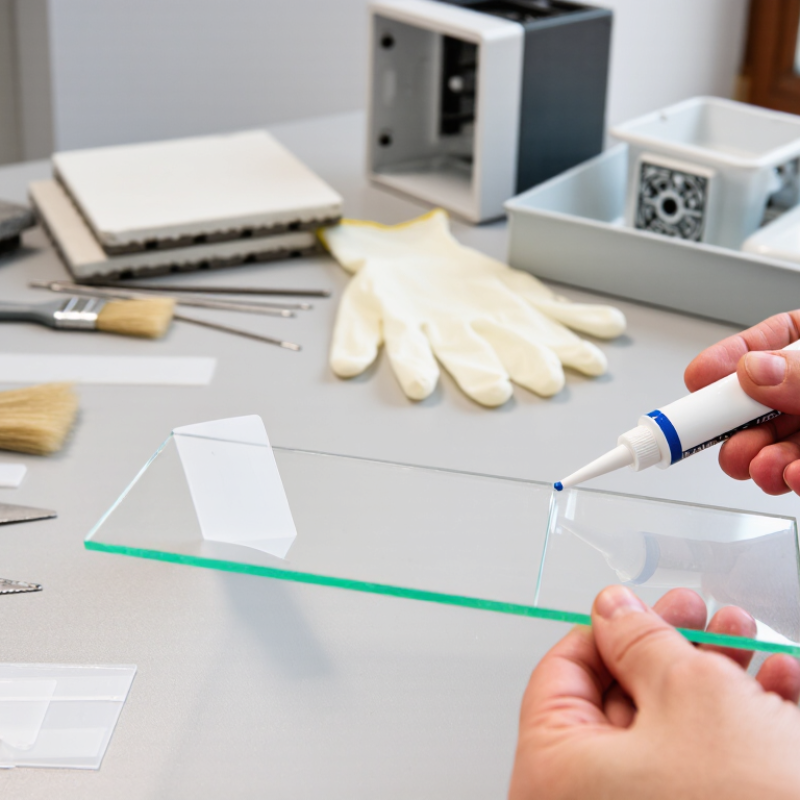
Silicone bonding glue is a flexible adhesive made from silicone-based polymers. Many one-part formulas cure when they react with moisture in the air. During curing, reactive groups form links between polymer chains, turning a paste into a rubber-like material. Some products use two parts that react after mixing. The exact chemistry varies. Some release small molecules as they cure, so check the product’s technical information and allow ventilation as directed.
That flexibility is useful. A cured bead can help join glass, ceramic, metal, or some plastics while tolerating vibration and temperature changes. It is commonly used around appliance panels, seals, and small assemblies that may expand or move. It is not a universal glue. Silicone may bond poorly to oily metal, dusty surfaces, or certain low-energy plastics. Clean, dry surfaces matter; a fingertip of grease can spoil adhesion. Let it cure fully before loading the joint. A surface that feels dry may still be soft underneath. I have seen people mistake that skin for a finished bond. That is an easy mistake. Check compatibility and test on a hidden area, especially when the material or coating is unfamiliar.
What Is Silicone Bonding Glue Used For?
How Moisture-Cure Silicone Adhesives Set at 2–3 mm per 24 Hours
Moisture-cure silicone adhesives bond materials such as glass, metal, ceramic, and some plastics. They also seal gaps against water and air. Typical industry technical data sheets report cure depths of about 2–3 mm in 24 hours. This is a depth from an exposed surface, not a guarantee that every bead will fully cure in one day. A thick bead may feel firm outside while remaining soft inside. That is not a promise. Temperature, humidity, bead shape, and airflow all affect the rate. In practice, a cool, dry workshop can slow curing noticeably.
The chemistry explains the limit: these adhesives react with moisture in the surrounding air, and the reaction advances inward. A narrow bead with exposed sides usually cures more evenly than a deep, enclosed joint. ASTM C679 describes a test for tack-free time, while ASTM C1184 covers requirements for structural silicone sealants; neither should be mistaken for a universal 2–3 mm cure guarantee. Check the adhesive’s technical data sheet for the stated test conditions, then allow extra time for thick joints. Small beads cure faster. A simple check helps: cut a sample bead and inspect its center before loading the bond. I would still treat the stated rate as a planning estimate, not a stopwatch.
| Topic | Typical Details | Practical Importance |
|---|---|---|
| Common uses | Bonding and sealing glass, ceramic, and some metal or plastic assemblies; sealing joints around windows, fixtures, and equipment. | Silicone remains flexible after curing, making it useful where a joint may experience vibration, movement, or temperature changes. |
| Moisture-cure mechanism | Atmospheric moisture reacts with the uncured material, forming an elastomeric silicone network. Cure generally advances inward from surfaces exposed to air. | A surface may form a skin while material deeper in a thick bead is still uncured. |
| Typical cure depth | Many moisture-cure silicone adhesives cure approximately 2–3 mm in depth per 24 hours under suitable conditions; actual rates vary by formulation and environment. | Allow additional time for thicker sections. Do not assume a bead is fully cured just because its outer surface feels dry. |
| Surface skin time | Often about 5–30 minutes at room temperature, depending on the formulation, temperature, and humidity. | Assemble or tool the joint within the product’s stated working time; a formed skin can reduce wetting and contact. |
| Conditions affecting cure | Higher humidity and moderate warmth generally support faster moisture cure. Cold, dry air and restricted moisture access can slow it. | Use the adhesive’s technical instructions for recommended temperature, humidity, bead size, and cure time. |
| Joint design | Thin, accessible beads usually cure more evenly than thick, enclosed masses. Moisture must be able to reach the uncured material. | Design joints so the adhesive is not sealed away from ambient moisture before curing is complete. |
| Surface preparation | Surfaces should be clean, dry, and free of dust, oil, and loose material. Some substrates require a compatible primer or a test bond. | Preparation improves adhesion; silicone does not bond equally well to every plastic, coating, or contaminated surface. |
| Bonding versus sealing | Silicone adhesive can provide adhesion and sealing, but load-bearing performance depends on the adhesive, substrate, joint geometry, and loading conditions. | For structural or safety-critical applications, use a product specifically rated for that application and follow its design requirements. |
| Compatibility and cure by-product | Silicone formulations differ; some release an acidic by-product during cure, while others use different cure chemistries. | Check compatibility with sensitive metals, electronics, natural stone, and other materials before use. |
| When the joint is ready | Full cure may take several days or longer for thick applications, even when the surface has skinned over. | Keep the joint undisturbed and avoid loading or exposing it to service conditions until the manufacturer’s stated cure time is met. |
Note: Cure-rate figures are typical guidance, not a guarantee. Product formulation, bead thickness, substrate, temperature, humidity, and access to moisture all affect the actual cure time.
Silicone bonding glue is used where a joint needs flexibility as well as adhesion. On glass, it can secure panes, decorative pieces, or aquarium-style seams when the product is rated for that purpose. It also bonds metal parts, such as trim or lightweight panels, while absorbing some vibration and movement. Clean, dry surfaces matter. Dust, oil, and old sealant can weaken the bond.
On ceramics, silicone can join tiles, fixtures, and small household components, especially where slight movement might crack a rigid adhesive. Plastic is less predictable. Some silicone formulas adhere well to specific plastics, while others peel away from low-energy surfaces such as polyethylene. Check the product instructions and test an inconspicuous spot. That step is easy to skip.
In electronics, suitable silicone adhesives can hold wires, damp vibration, or protect components from moisture. Use a formulation intended for electronics; some curing chemistries may corrode sensitive parts. Keep adhesive clear of connectors, vents, and heat-sensitive areas. Cure time depends on bead thickness and humidity, so a surface that feels dry may still be soft inside. I would not treat silicone as a universal structural adhesive: heavy loads and constant peeling can defeat it.
What Is Silicone Bonding Glue Used For?
Silicone bonding glue joins and seals materials such as glass, ceramic, metal, and some plastics. It is useful around windows, equipment housings, and joints exposed to movement or moisture. Once cured, many silicone formulations remain flexible instead of becoming brittle. That matters when a metal panel expands beside a glass surface. Not every formula bonds equally well to every substrate.
Performance standards help clarify what a product has been tested to do. ASTM C920 covers elastomeric joint sealants and classifies properties such as movement capability and intended use. ISO 11600 also classifies sealants by application and performance, including movement classes. These standards are useful evidence, but they do not automatically prove suitability for every bonding job. A stated service range of –50°C to 200°C can suit demanding temperature swings, but check the product data sheet. Continuous exposure and brief temperature peaks may have different limits. Surface preparation, cure depth, and joint design also affect results. This is easy to overlook.
Tips: Confirm the substrate is compatible, clean, and dry. Check whether the temperature rating applies after full cure. Test a small hidden area when adhesion is uncertain. A standards claim is a starting point, not the whole decision.
Silicone bonding adhesives and sealants are commonly used for glass, metal, ceramic, selected plastics, façade joints, glazing, weather sealing, sanitary applications, and electronic protection. Many formulations are designed for demanding service temperatures from approximately −50°C to 200°C, but the actual range depends on the cured product and application.
The chart compares nominal movement classes recognized by ASTM C920 and ISO 11600. These percentages describe joint-movement classification, not a universal temperature rating. Temperature resistance, adhesion, curing behavior, and chemical durability must be confirmed from the technical data for the specific silicone formulation.
Silicone bonding glue is used for flexible joints around glass, metal, ceramics, plastics, and painted surfaces. It remains elastic after curing, so it handles vibration, moisture, and moderate movement better than rigid adhesives. Select a formula according to the materials, temperature range, and exposure conditions. A bathroom joint needs strong moisture resistance. A heated enclosure needs higher thermal stability. Always check the technical data sheet before trusting a product.
Surface preparation often decides the result. Remove dust, oil, old sealant, and loose paint. Wipe compatible surfaces with isopropyl alcohol, then let them dry completely. Test a small hidden area first. Some plastics release additives that weaken adhesion. Apply a continuous bead, press the parts together gently, and avoid squeezing out all the adhesive. A thin, even layer usually cures more reliably than a thick lump.
Patience matters. Most silicone adhesives form a skin quickly but need much longer to cure inside. Support the joint without movement during that period. In my workshop, I once handled a joint after several hours because the surface felt dry. It failed the next day. That mistake was avoidable. Humidity, temperature, bead thickness, and poor ventilation can change curing time. Leave extra curing time when the joint carries weight or faces repeated stress. Inspect the edge for gaps, trapped air, or peeling before putting the assembly into service.
It is a flexible adhesive made from silicone-based polymers. Many one-part formulas cure with moisture in the air. The paste becomes rubber-like.
It can join glass, ceramic, metal, and some plastics. Results depend on the formula and surface. Polyethylene can be difficult.
Remove dust, oil, and old sealant. Keep surfaces clean and dry. Even a fingertip of grease can weaken adhesion. Test a hidden spot.
Follow the product’s cure-time instructions. A dry outer skin does not mean the bead is cured inside. I’d double-check this; it’s easy to misjudge.
Some formulas are made for electronics. Other curing chemistries may harm sensitive parts. Keep glue away from connectors, vents, and heat-sensitive areas.
Many cured formulas stay flexible through temperature changes. Some products state a service range, such as –50°C to 200°C. Check the data sheet for continuous-use limits.
These standards classify sealant properties and intended uses. They can help compare products, but they do not guarantee suitability for every joint.
Not always. Heavy loads or constant peeling can defeat the bond. Silicone is not a universal structural adhesive. Test the joint before relying on it.
Silicone Bonding Glue is a flexible, moisture-curing adhesive designed to create durable bonds and seals between a wide range of materials. Its chemistry reacts with moisture in the air, forming an elastic silicone network that can tolerate movement, vibration, temperature changes, and environmental exposure. Most formulations cure at approximately 2–3 mm per 24 hours, so joint thickness and ventilation should be considered during assembly.
This adhesive is commonly used for glass, metal, ceramics, plastics, and selected electronic components, especially where flexibility and weather resistance are important. Products may be evaluated against performance standards such as ASTM C920 and ISO 11600, while suitable grades can operate across temperatures from about –50°C to 200°C. For reliable results, users should select a formulation compatible with the substrates, clean and dry the surfaces, apply an even bead, maintain the recommended joint design, and allow sufficient curing time before stressing the bond.

Saiqiang