Choosing the right Clear Silicone Caulk can prevent leaks, stains, and expensive rework across international projects. Global buyers often compare products by transparency, flexibility, curing speed, adhesion, and resistance to moisture. Yet the best option depends on the surface, climate, and installation conditions.
This guide examines ten practical silicone caulk types for bathrooms, kitchens, windows, aquariums, construction joints, and industrial applications. Some formulas remain crystal clear after curing, while others develop a slight blue or amber cast. That difference is visible around white tile, glass edges, and polished stone. Fast-curing products may save labor, but they can reduce working time during detailed installations.
Application details matter. A clean, dry joint usually produces better adhesion than a rushed bead over dust or old sealant. Temperature and humidity also influence curing performance. Buyers should review technical data sheets, storage requirements, packaging languages, and regional compliance documents before ordering. Product claims should be checked against independent test results when available.
No single caulk performs perfectly everywhere. A formula suited to a shower may not meet the movement requirements of an exterior façade. Even experienced installers can misjudge joint width or surface compatibility. This comparison focuses on usable differences, not vague marketing language. It also highlights limitations, so purchasing teams can select Clear Silicone Caulk with greater confidence and fewer costly surprises.
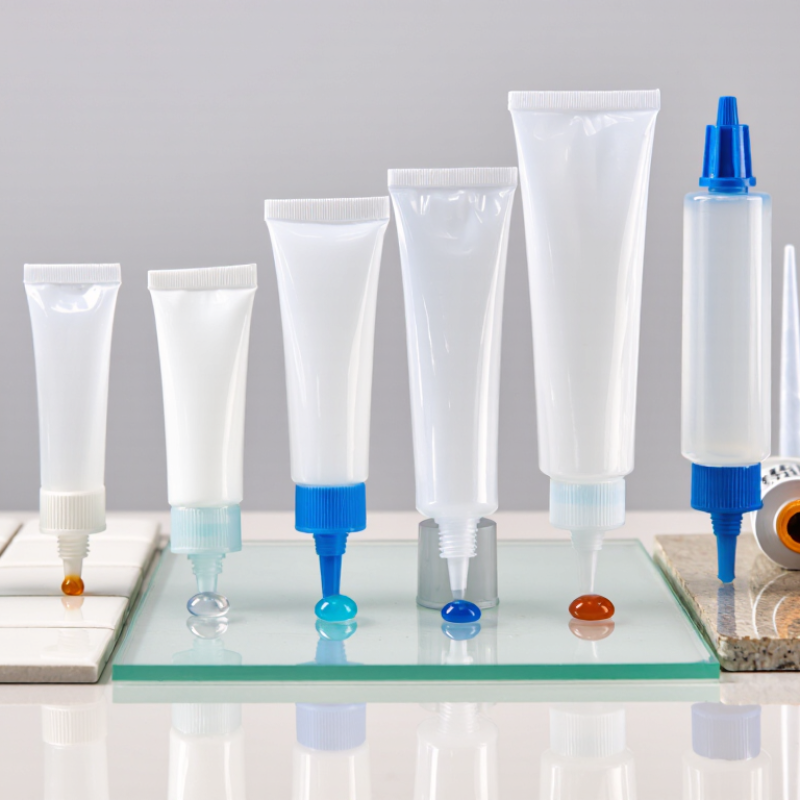
How Clear Silicone Caulk Is Classified by Chemistry, Cure, and Use
Top 10 Clear Silicone Caulk Types for Global Buyers
How Clear Silicone Caulk Is Classified by Chemistry, Cure, and Use
Clear silicone caulk is not one universal product. Its chemistry affects adhesion, odor, corrosion risk, and curing speed. Acetoxy silicone releases acetic acid and often smells like vinegar. It bonds well to glass and ceramic, but may affect sensitive metals or porous stone. Neutral-cure silicone releases fewer corrosive by-products. It suits metal frames, mirrors, concrete, and many plastics. Alkoxy and oxime systems are common neutral-cure categories, though their performance can differ.
Cure type also separates products. One-part moisture-cure caulk hardens from the surface inward. A 3-millimeter bead may skin quickly, while a deeper joint remains soft longer. Two-part addition-cure silicone mixes before application and offers more controlled curing. It can serve factory glazing, electrical sealing, or repeatable production work. Use classification matters too: glazing grades, sanitary grades, construction grades, and high-temperature grades are not interchangeable. Clear does not mean invisible; dust, bubbles, and uneven joints remain noticeable.
Tips: Check the technical data sheet, not only the product photo. Confirm movement capability, service temperature, cure depth, and substrate compatibility. Test a small hidden area, especially on stone, coated metal, or painted surfaces. Clean and dry the joint carefully. Poor preparation causes many failures. A practical mistake is choosing by clarity alone; real installations also need strong adhesion and suitable weather resistance. Even experienced buyers should recheck local packaging, labeling, and application requirements before ordering internationally.
ASTM C920 and ISO 11600 Criteria for Comparing Silicone Sealants
Top 10 Clear Silicone Caulk Types for Global Buyers
When comparing clear silicone caulk, ASTM C920 and ISO 11600 provide useful technical anchors. ASTM C920 evaluates elastomeric sealants by type, grade, class, and intended use. For example, a Class 25 sealant should accommodate joint movement of plus or minus 25 percent under specified conditions. That number matters around window frames, bathroom joints, and exterior panels.
ISO 11600 uses classifications such as F for façade joints and G for glazing applications. Codes like 25LM or 25HM indicate movement capability and modulus. Low-modulus silicone usually handles joint movement with less stress on the substrate. However, classification alone does not prove long-term performance. Buyers should request laboratory reports, application limits, curing data, and adhesion results for glass, ceramic, aluminum, or concrete.
Clear does not mean invisible forever. Dust, ultraviolet exposure, moisture, and substrate movement can change its appearance. In field inspections, poor surface cleaning remains a common failure point. It is easy to blame the sealant, but installation temperature and joint design often matter more. A compliant product may still disappoint when the joint is too shallow or poorly prepared. This is where buyers need more than a certificate. Check batch consistency, storage conditions, technical instructions, and independent testing. Some details are easy to overlook. That deserves careful review.
Top 10 Clear Silicone Caulk Types for Global Buyers
ASTM C920 and ISO 11600 movement-class benchmarks for comparing silicone sealants
The chart compares commonly specified clear silicone caulk types by their indicative movement capability benchmark. ASTM C920 commonly uses Class 12.5, 25, and 50, while ISO 11600 includes classes such as 7.5, 12.5, 20, and 25. A higher percentage indicates greater designed joint movement capability. Actual certification depends on the complete sealant formulation, substrate, joint design, curing conditions, and manufacturer test results. Structural glazing and fire-rated applications require additional project-specific standards beyond ASTM C920 or ISO 11600.
Top 10 Clear Silicone Caulk Types Ranked by Performance Data
Top 10 Clear Silicone Caulk Types for Global Buyers
Top 10 Clear Silicone Caulk Types Ranked by Performance Data
For global buyers, clear silicone should be ranked by movement, adhesion, weather resistance, and curing behavior. Based on ASTM C920 performance criteria and ISO 11600 movement classifications, the practical ranking is: 1) 100% neutral-cure exterior silicone, 2) low-modulus glazing silicone, 3) high-movement façade silicone, 4) neutral-cure sanitary silicone, 5) acetoxy bathroom silicone, 6) UV-resistant window silicone, 7) fast-cure silicone, 8) low-odor indoor silicone, 9) aquarium-grade silicone, and 10) general-purpose clear silicone. The first three usually perform best under thermal expansion and outdoor exposure. Class 25 and Class 50 movement ratings are useful benchmarks. Higher movement capacity often means safer joints.
Field experience adds an important detail. A sealant may pass laboratory tests yet fail on dusty aluminum, damp tile, or poorly prepared glass. Neutral-cure formulas usually offer broader substrate compatibility. Acetoxy formulas can cure faster, but their odor and acidic reaction may limit metal applications. Sanitary grades often resist fungal staining, although cleaning habits still matter. Rankings are not flawless. Joint design, surface preparation, and storage can change the result more than expected.
Tips: Check the technical data sheet for movement rating, tensile strength, elongation, skin time, and service temperature. Compare results tested under ASTM or ISO methods. Apply a small test bead first. Clear sealant can look cloudy on dark surfaces. Use the smallest practical joint depth, and allow full curing before water exposure.
Top 10 Clear Silicone Caulk Types for Global Buyers - Top 10 Clear Silicone Caulk Types Ranked by Performance Data
| Rank |
Clear Silicone Caulk Type |
Typical Cure Chemistry |
Skin Time
(minutes) |
Typical Cure Rate
(mm/24 hours) |
Service Temperature
(°C) |
Typical Elongation
(%) |
Movement Capability
(%) |
UV and Weathering Resistance |
Typical Shore A
Hardness |
Best-Fit Applications |
Performance Score
(100) |
| 1 |
Neutral-Cure Weatherproof Silicone |
Oxime or alkoxy neutral cure |
10–25 |
2–3 |
-50 to 150 |
400–700 |
±25 to ±50 |
Excellent |
20–35 |
Exterior glazing, façades, curtain walls, perimeter sealing and high-exposure joints |
94 |
| 2 |
Low-Modulus Neutral Silicone |
Alkoxy or oxime neutral cure |
10–30 |
2–3 |
-50 to 150 |
500–800 |
±50 |
Excellent |
15–30 |
High-movement façade joints, window perimeters and dissimilar substrates |
93 |
| 3 |
High-Modulus Neutral Silicone |
Oxime or alkoxy neutral cure |
10–25 |
2–3 |
-50 to 150 |
300–600 |
±25 to ±35 |
Excellent |
25–40 |
Rigid bonding, sanitary assemblies, interior glazing and general construction joints |
90 |
| 4 |
Alkoxy-Cure Clear Silicone |
Alkoxy neutral cure |
8–20 |
2–4 |
-50 to 150 |
350–650 |
±25 to ±50 |
Excellent |
20–35 |
Metal, glass, coated surfaces, electronics-adjacent sealing and low-odor interior work |
89 |
| 5 |
Sanitary Clear Silicone |
Acetoxy or neutral cure with fungicide |
5–15 |
2–3 |
-40 to 150 |
250–500 |
±20 to ±25 |
Very good |
20–35 |
Bathrooms, kitchens, shower enclosures and wet-area joints; verify biocidal requirements |
86 |
| 6 |
Acetoxy-Cure Clear Silicone |
Acetoxy cure; releases acetic acid |
5–15 |
2–4 |
-50 to 150 |
300–600 |
±25 |
Very good |
20–35 |
Glass-to-glass sealing, aquariums and non-sensitive ceramic applications |
84 |
| 7 |
Construction-Grade Clear Silicone |
Usually neutral cure; formulation varies |
10–30 |
2–3 |
-40 to 150 |
300–600 |
±25 to ±50 |
Very good |
20–40 |
General building joints, trim, glass, metal and weather sealing |
83 |
| 8 |
Fast-Skinning Clear Silicone |
Fast-reacting acetoxy or neutral cure |
3–10 |
2–4 |
-40 to 150 |
250–500 |
±20 to ±25 |
Good to very good |
20–40 |
Production-line sealing, repairs and installations requiring rapid surface skin formation |
80 |
| 9 |
Self-Leveling Clear Silicone |
Usually neutral cure |
10–30 |
1.5–3 |
-40 to 150 |
300–600 |
±25 |
Very good |
15–30 |
Horizontal joints, glazing channels and surfaces where smooth flow is required |
78 |
| 10 |
High-Transparency Optical-Grade Silicone |
Specialized neutral cure |
15–40 |
1–2 |
-50 to 150 |
200–500 |
±20 to ±30 |
Excellent |
20–35 |
Display cases, transparent assemblies, decorative glazing and appearance-critical sealing |
77 |
Data shown are representative industry ranges for clear, one-component silicone caulks and are intended for preliminary global sourcing comparisons. Actual values vary by formulation, substrate, bead size, temperature, humidity and test method. Buyers should confirm the latest technical data sheet, safety data sheet, certification requirements and local regulations before specification.
How to Match Transparency, Movement, Cure Time, and Adhesion to Projects
Choosing among the top 10 clear silicone caulk types starts with the project, not the label. A clear sealant is not automatically invisible. Crystal-clear glazing silicone suits glass edges and display joints. Translucent grades can hide dust and uneven gaps better. UV-resistant formulas matter near windows, skylights, and outdoor panels. For bathrooms, sanitary silicone helps resist moisture and staining. Aquarium-grade silicone requires controlled formulation and careful surface preparation.
Movement is equally important. Low-modulus silicone follows expansion around metal, glass, and large panels. High-modulus types provide firmer support around stable joints. Check the expected joint movement, not only the advertised strength. A seal that looks strong may crack when materials expand at different rates. I once underestimated a narrow aluminum joint; its daily temperature change was enough to expose the mistake.
Cure chemistry affects both timing and adhesion. Acetoxy silicone cures quickly and bonds well to glass, but its acidic odor may concern sensitive metals. Neutral-cure silicone usually suits concrete, coated metal, and masonry more safely. Alkoxy and oxime systems offer different odor and adhesion profiles. Fast-cure grades reduce waiting time, while deep joints still need ventilation and moisture. Cure speed changes with humidity, temperature, and bead depth. Test adhesion on the actual substrate, especially painted surfaces, plastics, and dusty stone. Product data helps, but a small site trial remains more trustworthy.
Global Buyer Checklist: VOC Rules, Packaging, Shelf Life, and Import Specs
Top 10 Clear Silicone Caulk Types for Global Buyers require more than optical clarity. Buyers should check acetoxy, neutral-cure, sanitary, weatherproof, glazing, and high-temperature grades against the destination market.
VOC paperwork matters. U.S. EPA Method 24 is widely used for measuring volatile content, while California rules can apply stricter product requirements. In Europe, request REACH and CLP documentation, even when the sealant is not classified as hazardous. ASTM C920 and ISO 11600 provide useful performance references. ISO 11600 movement classes commonly include 7.5%, 12.5%, 20%, and 25%. A “low-VOC” statement alone is weak evidence. Ask for the test method, result, and laboratory date. I have seen buyers accept marketing sheets, then discover missing local-language warnings.
Tips: Confirm the HS code with a customs broker; silicone mastics are often classified under 3214.10, but national tariffs differ. Specify 300 ml cartridges or 400–600 ml sausages, nozzle design, carton strength, and pallet limits. Each carton should show batch number, manufacture date, expiry date, net volume, storage temperature, and country of origin. A 12–18 month shelf life is common, but it depends on formulation and storage. Request TDS, SDS, COA, packaging drawings, and transport test records. Do not assume sea containers stay cool. A hot container can shorten usable life, and this risk is easy to underestimate.
FAQS
ASTM C920 evaluates sealants by type, grade, class, and intended use. ISO 11600 identifies façade and glazing applications. These standards offer useful comparison points. They do not guarantee long-term performance.
It indicates movement capability of plus or minus 25 percent under specified conditions. This matters around window frames, bathroom joints, and exterior panels. Joint design still matters. Numbers can mislead.
These codes describe movement capability and modulus. Low-modulus silicone usually follows movement with less stress on the substrate. High-modulus silicone suits more stable joints. Confirm laboratory data before choosing.
Neutral-cure exterior silicone usually suits outdoor exposure. Low-modulus glazing silicone follows thermal movement around glass and metal. High-movement façade silicone handles larger joint changes. Check ultraviolet and service-temperature data.
No. Dust, ultraviolet exposure, moisture, and movement can change its appearance. A clear bead may look cloudy on dark glass. Translucent grades can hide uneven gaps better. Not perfect.
Neutral-cure silicone generally suits concrete, coated metal, masonry, and glass. Acetoxy silicone bonds glass well but releases an acidic odor. That reaction may limit metal applications. Test painted surfaces and plastics first.
Cure speed changes with humidity, temperature, and bead depth. Fast-cure silicone reduces waiting time. Deep joints still need ventilation and moisture. Allow full curing before water exposure. Patience matters.
Request movement ratings, tensile strength, elongation, skin time, and service temperature. Review adhesion results for glass, ceramic, aluminum, and concrete. Check batch consistency and storage conditions. A small site trial remains more trustworthy.
Not completely. Neutral-cure exterior and glazing types often perform well outdoors. Sanitary silicone helps resist moisture staining in bathrooms. Low-odor indoor silicone may improve comfort. Installation can matter more than ranking.
Dusty aluminum, damp tile, and poorly prepared glass can weaken adhesion. Narrow or shallow joints may crack during daily temperature changes. I once underestimated an aluminum joint. The mistake became visible later.
Conclusion
This guide explains how Clear Silicone Caulk is classified by chemical composition, curing method, and intended application. It compares neutral-cure and acetoxy-cure formulas, one-component and specialty systems, and evaluates key performance factors such as transparency, flexibility, adhesion, weather resistance, and curing speed. Using ASTM C920 and ISO 11600 as reference points, the article presents ten major clear silicone caulk types ranked by practical performance data, helping buyers understand how different formulations respond to movement, moisture, temperature changes, and various substrates.
The guide also provides a project-matching framework for selecting the right balance of optical clarity, movement capability, cure time, and adhesion. For international purchasing, it highlights essential checks including VOC requirements, packaging formats, shelf life, storage conditions, labeling, documentation, and import specifications. This structured approach enables global buyers to compare products consistently, reduce application risks, and choose a reliable sealant for construction, glazing, sanitary, industrial, and general maintenance projects.

 Saiqiang